
RSOLUTIONS official logoRSOLUTIONS
For people whose calendar is full and whose life is quietly lonely

Social connection: the well-being habit that outweighs almost everything

The longest-running study of human happiness keeps returning one answer: the quality of your relationships predicts your well-being — and even your health — better than wealth, fame, or fitness. Connection is not a nice-to-have. It is the main event, and it responds to practice.

Anti-lonelinessAdult friendshipDeepening bondsCommunityConnection ritualsSocial fitness

From The Art of Well-Being — 8 Parts · 40 Chapters · Purchase completed on Google Play

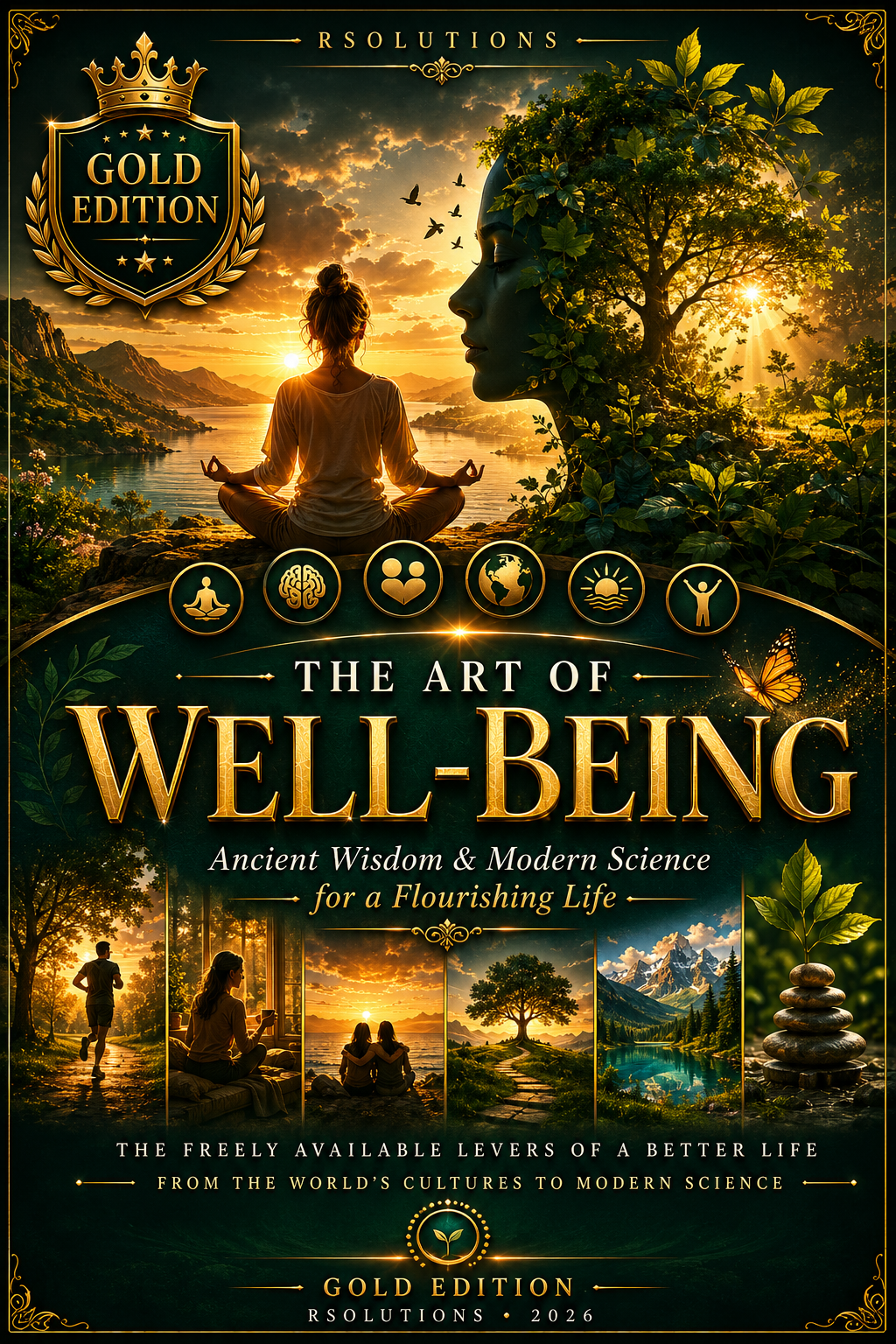
The Art of Well-Being book cover — Social connection: the well-being habit that outweighs almost everything Gold Edition
Burned out and running on empty?Want to feel good again?Looking for a happier, calmer life?Tired of just getting through the week?Want well-being that actually lasts?Ready to feel like yourself again?

This book teaches you how to build real well-being — for real. Daily habits for calm, rest, happiness, and connection, drawn from science and from cultures around the world. Warm, practical, no quick-fix promises.

Is this you?

Surrounded by contacts. Short on connection.

Your friendships run on birthday messages and good intentions.
You have not made a new real friend since school or an old job.
Conversations stay at logistics and news — never at life.
You wait for others to reach out, and so do they.
Moving, career, or parenting quietly emptied your social world.
You are lonely in a way you would never say out loud.
The method

Relational wealth: the evidence and the practice

The finding that should reorganize your priorities

Eight decades of the Harvard Study of Adult Development, plus a mountain of replication, converge on one headline: warm relationships are the strongest predictor of life satisfaction and long-term health — stronger than money, status, or cholesterol numbers. Loneliness, meanwhile, carries health risks researchers compare to major lifestyle hazards.

Yet connection is the priority almost nobody schedules. We treat relationships as what happens in leftover time, then wonder at the emptiness. The reframe the book insists on: social fitness — like physical fitness, it grows with training, atrophies with neglect, and deserves a standing slot in the week.

Loneliness: the signal, not the sentence

Loneliness is not a character verdict; it is a biological signal — thirst, for connection — and modern life manufactures it at scale: relocation, remote work, car commutes, and screens that simulate company without delivering it. Feeling it means the signal works.

The response is action sized to reality: one reach-out today (the message you have been meaning to send), one recurring social anchor this month (a weekly class, a standing coffee), one honest conversation this season. Loneliness that is persistent and heavy, though, deserves a professional ear as well — isolation and mood feed each other, and untangling them is legitimate work.

Making friends as an adult (the part nobody teaches)

Childhood friendships assembled themselves from proximity plus repetition plus unguarded time — school provided all three for free. Adult life provides none, so friendship must be engineered with the same ingredients: recurring shared contexts (clubs, courses, teams, volunteering — anything weekly), and then the move almost everyone omits: escalation. The friendly acquaintance becomes a friend when someone proposes the outside-the-context coffee. Someone has to go first; let it be you.

Expect a numbers reality: many pleasant contacts, few kindred spirits — that is normal, not failure. And reconnection is criminally underrated: the old friend, message half-composed for months, is usually delighted to hear from you. Research on reach-outs shows they land far better than senders predict.

Deepening: from logistics to life

Adult conversations calcify at the surface — schedules, news, real estate. Depth is a door someone must open: a slightly more real question ('what's actually been on your mind lately?'), a slightly more honest answer than usual when asked. Measured vulnerability, reciprocated, is the entire mechanism by which acquaintance becomes intimacy.

Rituals do the maintenance that memory forgets: the standing monthly dinner, the walking call with the distant friend, the check-in message that asks nothing. Small, recurring, reliable — connection compounds exactly like interest, and exactly as quietly.

Community, the table, and the wisdom of cultures

Beyond the inner circle, well-being wants a wider ring: community — the third place that is neither home nor work, the club, the congregation, the volunteering crew, the café where they know you. Weak ties, the research shows, lift mood more than intuition expects; the barista who knows your order is quietly load-bearing.

Every long-lived culture ritualized connection, and most did it around a shared table: the long lunch, the family dinner, the communal feast — food as the ancient technology of belonging. The book's practice imports it directly: eat with people, regularly, screens away. It is the oldest well-being intervention on record, and it still outperforms.

Note: This book and this page are for general education and personal growth. They do not provide medical, psychological, or nutritional advice and do not replace professional care. If you are struggling with your physical or mental health, please consult a qualified professional.
Action plan

The 7-step connection practice

1

Send the pending message

The friend you keep meaning to contact — today, three sentences. Reach-outs land better than senders predict.

2

Schedule connection like training

One standing social slot per week, calendar-protected. Social fitness needs its gym day.

3

Join one recurring context

A club, class, team, or volunteer crew — weekly, shared-purpose. Proximity plus repetition is the friendship factory.

4

Make the escalation move

Promote one friendly acquaintance: propose the coffee outside the shared context. Someone goes first; be someone.

5

Open one real door per week

Ask the slightly deeper question; give the slightly honest answer. Depth is a two-turn game — take turn one.

6

Install one table ritual

A recurring shared meal — family dinner, monthly friends' table — screens away. The oldest intervention still wins.

7

Tend the weak ties

Learn the names, make the small talk, be a regular somewhere. The wider ring carries more than it seems.

Related searches this page answers

Built for the search you already made.

Core searches

social connection · relationships and happiness · how to make friends as an adult · loneliness · importance of connection

Friendship

making friends in your 30s · deepen friendships · reconnect with old friends · maintain friendships · male friendship

Community

find your community · third place · belonging · join a club · weak ties benefits

Rituals

shared meals · eating together · family dinner ritual · checking in on friends · connection habits

Get the complete system

This guide comes from The Art of Well-Being.

Everything on this page is one slice of the full book. Prices are Google Play listing references and may vary by region, taxes, and availability.

FAQ

Questions people ask about social connection and friendship.

Do relationships really matter more than money for happiness?

The long-run evidence says yes — warm relationships are the most consistent predictor of life satisfaction and healthy aging across decades of research, ahead of wealth and status once basic needs are met.

How do I make friends as an adult?

Engineer what school gave you free: recurring shared contexts (weekly clubs, classes, teams), then escalate — propose the coffee outside the context. Repetition builds familiarity; the invitation converts it to friendship.

Is it weird to reach out to someone after years?

Research on reconnection says recipients are consistently happier to hear from you than you predict. Three sentences, no apology tour required — 'you crossed my mind, how is life?' works.

I'm introverted. Does this apply to me?

Fully — the dose just differs. Introverts thrive on fewer, deeper bonds and lower-stimulation settings: the one-on-one walk, the small table, the recurring pair coffee. Depth over breadth is a valid strategy, not a deficiency.

How many close friends do I actually need?

Research points to quality over count: a few genuinely close relationships plus a healthy wider ring covers most of the benefit. One kindred spirit outweighs fifty contacts.

Why do my friendships feel stuck at surface level?

Because depth requires a first move nobody is making: the slightly realer question, the slightly honester answer. Measured vulnerability, reciprocated over a few exchanges, is the entire staircase.

Do online friendships count?

They carry real value — especially with voice and video — and they are better than isolation. In-person contact still delivers effects screens cannot fully replicate, so the book's rule is: use digital to maintain, use presence to deepen.

What are 'weak ties' and why do they matter?

The light relationships — neighbors, baristas, gym regulars, colleagues from other floors. Studies show these casual interactions lift mood and belonging more than expected. Being a regular somewhere is a well-being practice.

What if loneliness feels too heavy to act on?

Start with the smallest unit — one message, one walk among people, one hello — and consider a professional ear too: persistent heavy loneliness and mood feed each other, and untangling them is legitimate, effective work. You are not meant to fix it alone.

Where is the full connection system?

The connection pillar of The Art of Well-Being — friendship, community, family rituals, and the world's table traditions — in Lite and Gold editions.

Final step

The good life has a guest list.

One message today, one standing ritual this month, one table that gathers — relational wealth compounds from deposits this small. The practice is in the book.