
RSOLUTIONS official logoRSOLUTIONS
For minds that treat every quiet moment as a problem-solving emergency

How to calm a racing mind: the overthinker's field guide

Your mind replays the past, rehearses the future, and audits every word you said today — all at once, mostly at night. A racing mind is not a personality; it is a pattern. Patterns can be retrained, and this page is the training manual.

Stop ruminationScheduled worryThought defusionNight racingBrain dumpInput diet

From The Art of Inner Mastery — 8 Parts · 39 Chapters · Purchase completed on Amazon

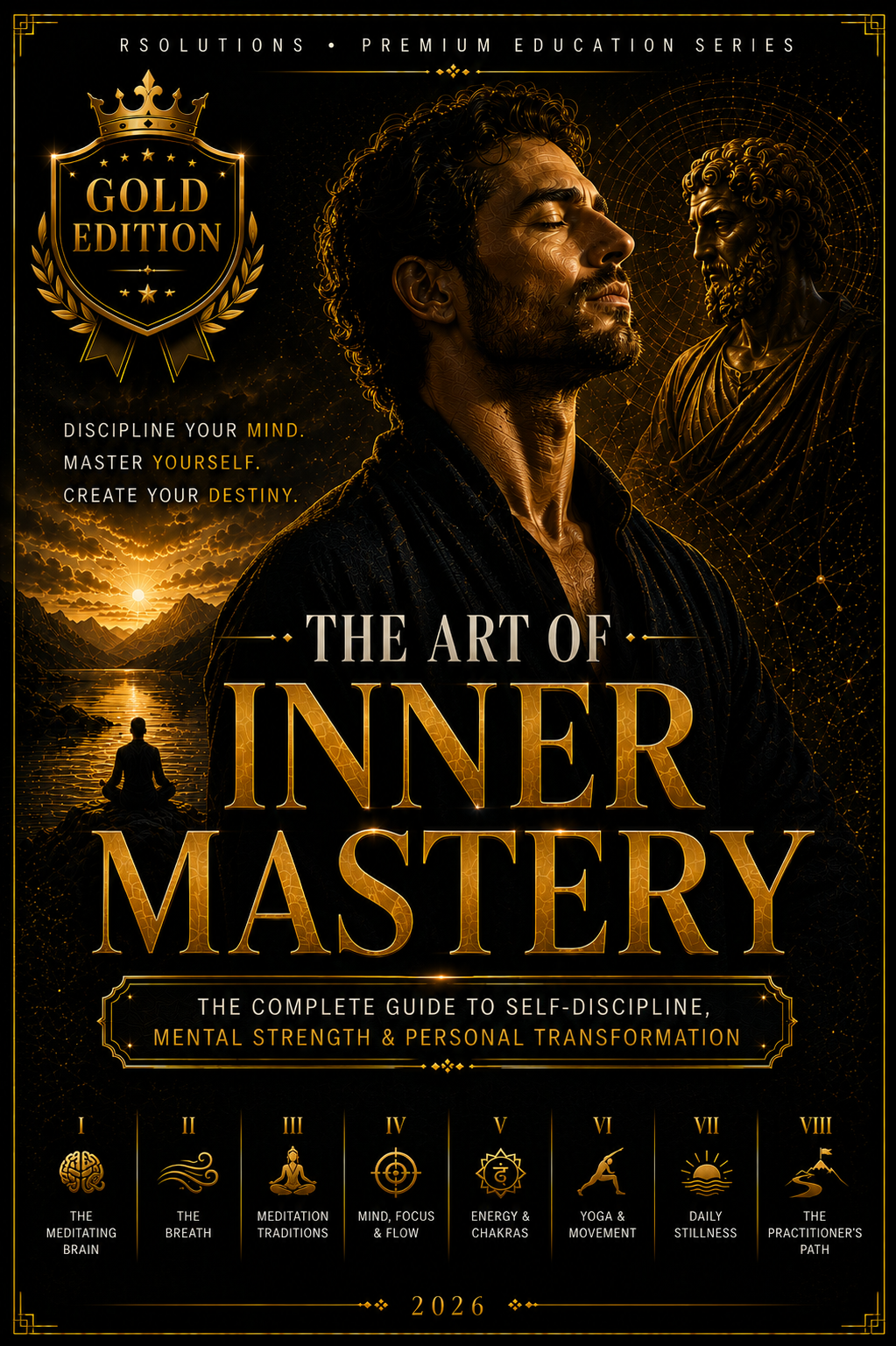
The Art of Inner Mastery book cover — How to calm a racing mind: the overthinker's field guide Gold Edition
Mind won't stop racing?Stressed and can't switch off?Looking for inner peace?Want to finally learn meditation?Tired of living on edge?Ready to master your inner world?

This book teaches you how to master your inner world — for real. Meditation that sticks, breathwork that calms you in minutes, and emotional control you can train. Clear, practical, no mysticism required.

Is this you?

The noise is optional. Nobody ever told you that.

You replay conversations days after everyone else forgot them.
Your brain saves its best catastrophes for 3 a.m.
You think about problems endlessly without ever solving them.
Decisions take you weeks because every option spawns ten what-ifs.
Even good moments get audited: 'am I enjoying this enough?'
You cannot remember your last genuinely quiet internal hour.
The method

Quieting the mind: five interventions that actually work

Rumination is not thinking (know the difference)

Real problem-solving moves: it defines the problem, generates options, picks one, acts. Rumination loops: same scenes, same fears, same grievances, zero output — a mental treadmill that burns energy and produces cortisol instead of solutions. The first skill is telling them apart in real time.

The book's litmus test: after ten minutes, do you have an action or just more agitation? If agitation — you are ruminating, and the answer is intervention, not more thinking. More thinking is the disease claiming to be the cure.

Defusion: stop being your thoughts

You are not your thoughts; you are the one hearing them. Cognitive defusion techniques build that separation: prefix looping thoughts with 'I notice I'm having the thought that…', watch thoughts drift past like leaves on a stream, or thank the mind ('thanks, mind, got it') and return to the task. The thought loses none of its content — it loses its grip.

This is the deep mechanic under meditation's calming effect: thousands of reps of watching thoughts arise and pass without boarding them. The cushion is where you practice; the 3 a.m. spiral is where it pays.

Scheduled worry: containment beats suppression

Telling yourself not to worry is gasoline. What works is containment: a daily 15-minute worry appointment — same time, notebook out, worry deliberately and on paper. When loops arise outside the slot, note them for the appointment and return to your day. Research on worry postponement shows the loops genuinely learn to wait.

On paper, half the worries reveal themselves as unactionable weather; the other half get converted into next actions — which is thinking, not rumination. Either way, the 3 a.m. shift gets cancelled for lack of business.

The night protocol: racing thoughts at bedtime

Night racing happens because bed is the day's first silence — the backlog finally gets bandwidth. The counter is processing before bed: a ten-minute brain dump (everything on your mind, onto paper, plus tomorrow's first steps) tells the mind it is safe to power down. Studies show pre-sleep to-do writing measurably shortens time to sleep.

In bed itself: long exhales (4-7-8 from the breath toolkit), a body scan from feet upward, and defusion for whatever still surfaces. If twenty minutes pass, get up, low light, boring activity, return sleepy — beds are for sleeping, not for board meetings with your fears.

The quieter baseline: input diet and daily stillness

A mind fed sixteen hours of feeds, news, takes, and notifications will race — it is processing a stadium's worth of input with no digestion time. The structural fix is an input diet: fewer channels, batched checking, protected silent gaps (walks without podcasts, queues without phones). Boredom is not the enemy; it is where the mind metabolizes the day.

Add ten minutes of daily meditation as the active ingredient and the baseline itself shifts: fewer loops start, and the ones that start find a mind that knows how to watch them pass. Quiet, it turns out, is less something you find and more something you train.

Note: This material is for general education and personal growth. It is not medical or psychological advice and does not replace professional care. If you experience persistent anxiety, depression, or other health concerns, please consult a qualified professional.
Action plan

The 7-step quiet-mind protocol

1

Run the litmus test

Ten minutes into any thinking session: action produced, or just agitation? Agitation means intervene, not continue.

2

Book the worry appointment

Fifteen minutes daily, notebook out, worry on purpose. Outside the slot: 'noted — you have an appointment.'

3

Practice defusion daily

Prefix loops with 'I notice I'm having the thought that…' — on small stuff first, so it is ready for the big stuff.

4

Dump before bed

Ten minutes, everything on paper, plus tomorrow's first steps. Cancel the 3 a.m. shift in advance.

5

Protect silent gaps

One walk, one commute stretch, one queue per day with zero input. Digestion time for the mind.

6

Shrink the input firehose

Batch news and feeds into windows you choose. A calmer mind starts with a saner diet.

7

Train the baseline

Ten minutes of meditation daily — the gym where watching-without-boarding becomes your default setting.

Related searches this page answers

Built for the search you already made.

Core searches

how to calm your mind · how to stop overthinking · racing thoughts · quiet the mind · can't turn brain off

Loops

stop rumination · thought loops · spiraling thoughts · catastrophizing · what if thinking

Tools

scheduled worry time · thought defusion · thoughts are not facts · brain dump · journaling for overthinking

Night

overthinking at night · racing thoughts at night · can't sleep mind racing · 3am thoughts · pre sleep routine

Get the complete system

This guide comes from The Art of Inner Mastery.

Everything on this page is one slice of the full book. Prices are Amazon listing references and may vary by region, taxes, and availability.

Lite Edition

$9.99
$4.99
Free on Kindle Unlimited
  • Kindle eBook
  • Core system in one sitting
  • Best for a fast start
  • Direct Amazon purchase
Buy Lite on Amazon

Paperback

$29.99
$19.99
  • Premium print option
  • For shelf, notes or gift
  • Availability may vary
  • Amazon listing/search
Find Paperback on Amazon
FAQ

Questions people ask about calming the mind.

Why won't my mind just be quiet?

Minds generate thoughts the way hearts beat — the goal is not silence but non-attachment: thoughts arising and passing without you boarding each one. That relationship is trainable, and it feels like quiet.

What is the difference between overthinking and being thorough?

Output. Thoroughness converges on a decision or action; overthinking orbits without landing while the stakes feel bigger every lap. The ten-minute litmus test tells you which one you are doing.

Does scheduled worry time actually work?

Yes — worry postponement is a studied technique: loops learn to wait for their appointment, and paper converts half of them into actions and exposes the rest as unactionable. Containment beats suppression every time.

How do I stop catastrophizing?

Name it ('mind is running worst-case movies'), then ask three questions: How likely, really? Could I cope if it happened? What is one action that reduces the risk? Catastrophes shrink when audited.

What is thought defusion?

Techniques that create distance from thoughts instead of arguing with them: 'I notice I'm having the thought that…', leaves-on-a-stream visualization, thanking the mind. The content stays; the grip releases.

How do I calm racing thoughts at night?

Process before bed (ten-minute brain dump plus tomorrow's first steps), then in bed: extended-exhale breathing, body scan, defusion. Still awake after twenty minutes? Up, low light, boring activity, return sleepy.

Is overthinking anxiety?

They overlap but are not identical: overthinking is a habit pattern; anxiety is a broader state that can drive it. If loops come with persistent dread, physical symptoms, or life impact, a professional assessment is the wise move alongside these tools.

Can meditation really quiet a lifelong noisy mind?

It does not mute the mind — it changes your seat from inside the storm to the window. With daily practice, fewer loops start and the ones that start pass faster. Give it eight honest weeks before judging.

Does cutting news and social media help?

Substantially. Input volume is thought fuel: fewer channels, batched checks, and daily silent gaps reduce raw material for loops. Many people report a third of their mental noise was simply undigested feed.

Where is the complete system?

The Art of Inner Mastery integrates the quiet-mind tools with meditation, breathwork, and emotional regulation as one training path — Lite and Gold editions.

Final step

The 3 a.m. committee can be dissolved.

Defusion, contained worry, a night protocol, and a trained baseline — the racing mind is a pattern, and patterns retrain. Start with the book tonight.