
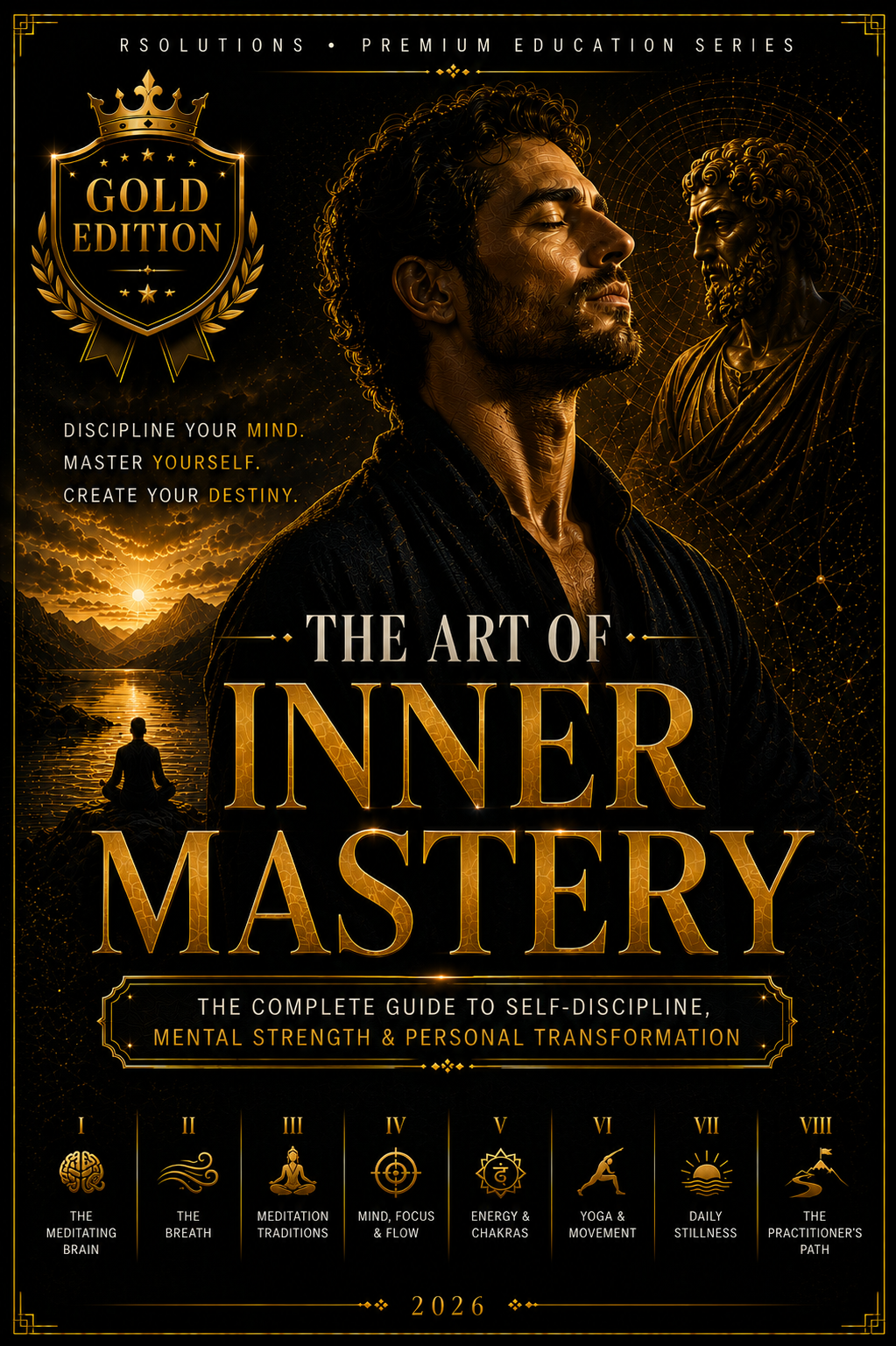
How meditation actually works — and how to start today
What meditation is (and the myth that stops beginners)
Meditation is not emptying the mind — no functioning brain does that. It is attention training: you rest attention on an anchor (usually the breath), the mind wanders, you notice the wandering, and you return. That cycle — wander, notice, return — is not the failure. It is the entire exercise, the mental push-up itself.
The moment you understand this, frustration collapses. A session with fifty wanderings and fifty returns is fifty reps — a great workout, not a disaster. The busy mind you are ashamed of is the very reason the practice works on you.
The basic method, step by step
Sit comfortably — chair is fine, floor is fine, spine tall but not rigid, hands resting anywhere natural. Eyes closed or softly lowered. Take three slower breaths to arrive. Then let breathing be natural and rest your attention on its sensation: nostrils, chest, or belly — pick one station and stay.
When you notice you are lost in thought — planning, remembering, arguing — mark it gently ('thinking'), and walk attention back to the breath. No punishment, no commentary, no starting over. You return the way you would guide a puppy back to the path: firmly, kindly, a thousand times.
How long, how often: the honest dosage
Start with five minutes daily. Not twenty — five, every day, same time slot. Consistency builds the neural change; duration can grow later. Research shows measurable attention and stress-regulation shifts within about eight weeks of short daily practice — the sit does not need to feel profound to be working.
Anchor it to an existing routine (after coffee, before shower) and treat the two-minute bad-day version as fully valid. A daily five beats a weekly thirty by a mile — this is habit mechanics applied to mind training.
The main styles, translated
Breath-focused mindfulness is the foundational gym — start there. Body scan moves attention systematically through physical sensation and doubles as a sleep aid. Loving-kindness meditation trains warmth toward yourself and others, with solid research on mood. Mantra styles give the mind a syllable instead of the breath. Walking meditation anchors to footsteps — ideal for people who hate sitting.
They are equipment in the same gym, not competing religions. The book maps when each is useful; the beginner's answer is simply breath first, experiments later.
Guided or unguided, apps or not — and the plateau
Guided audio is training wheels: excellent for the first weeks, worth outgrowing eventually so silence becomes available to you anywhere. Apps help some people with structure and streaks; they are not required, and this book deliberately teaches app-independent practice.
Expect the arc: novelty, then a boring plateau around weeks two to six where 'nothing is happening'. That plateau is where the actual rewiring occurs — the practitioners who cross it are the ones who get the calm everyone else keeps reading about.