
RSOLUTIONS official logoRSOLUTIONS
For people who go to bed tired and wake up more tired

How to sleep better: the habits and rituals of deep, reliable rest

You do not have a falling-asleep problem at 11 p.m. — you have an evening problem that arrives in bed with you. Sleep is not a switch; it is a landing, and good landings begin their descent early. Here is the approach pattern.

Wind-down ritualSleep environmentConsistent scheduleScreens & lightRacing mindRest ethic

From The Art of Well-Being — 8 Parts · 40 Chapters · Purchase completed on Amazon

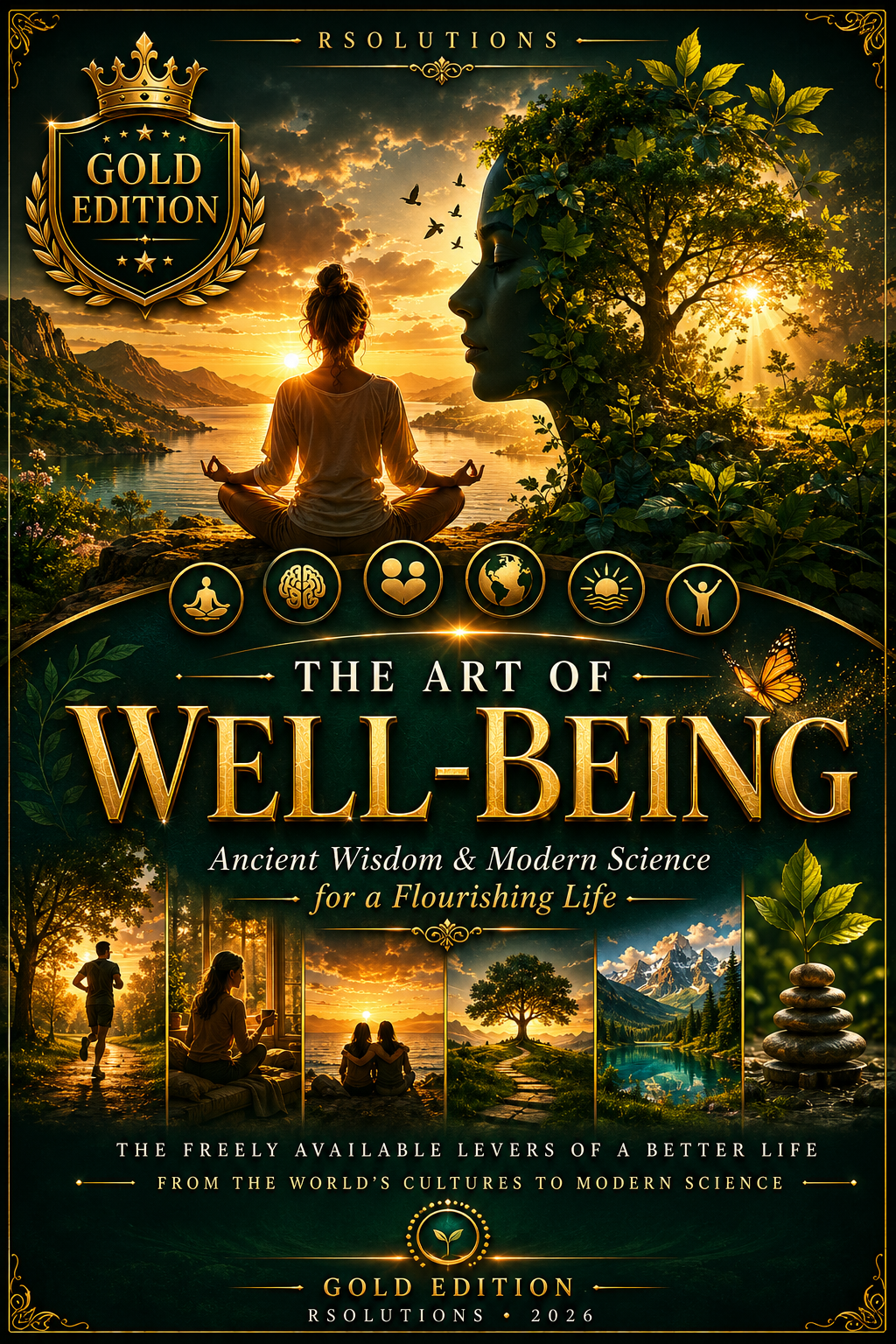
The Art of Well-Being book cover — How to sleep better: the habits and rituals of deep, reliable rest Gold Edition
Burned out and running on empty?Want to feel good again?Looking for a happier, calmer life?Tired of just getting through the week?Want well-being that actually lasts?Ready to feel like yourself again?

This book teaches you how to build real well-being — for real. Daily habits for calm, rest, happiness, and connection, drawn from science and from cultures around the world. Warm, practical, no quick-fix promises.

Is this you?

You treat sleep like an afterthought. It responds accordingly.

You scroll 'five more minutes' into 1 a.m. — nightly.
Your mind starts its daily review the moment the light goes off.
You sleep in on weekends and pay for it every Monday.
Your bedroom doubles as office, cinema, and news desk.
You are exhausted by 9 p.m. and inexplicably wired by 11.
You treat rest as what is left over — and there is never anything left over.
The method

The landing pattern: how good sleepers descend

Sleep pressure and the clock: the two systems that decide your night

Two forces govern sleep: pressure (which builds the longer you are awake, and drains with naps and late caffeine) and the circadian clock (which tracks light and timing, and decides when your body expects sleep). Fight either and the night suffers; align both and sleep becomes almost boringly reliable.

Alignment is mostly daytime work: morning outdoor light anchors the clock, movement during the day builds clean pressure, caffeine ends by early afternoon, and naps stay short and early. The night begins in the morning — this is the least intuitive and most useful sentence in sleep education.

Consistency: the unglamorous king

The single highest-leverage habit is a consistent sleep window — same bedtime, same wake time, weekends included (within an hour). Irregular schedules give the body permanent mini jet-lag: Monday grogginess is often just the return flight from a weekend two time zones into the night.

Pick a realistic window that fits your life and defend the wake time hardest — it is the anchor that trains everything upstream. Regularity beats duration heroics: a steady seven hours outperforms an oscillating five-to-nine.

The wind-down: descent begins 60 minutes out

Bodies do not sprint into sleep from bright light, feeds, and work email. A 30–60 minute descent ritual signals the landing: lights dimmed, screens down (or at minimum, boring and dim), and a repeated sequence — tidy, warm shower, stretch, read something paper and pleasant, tomorrow's first step written down. Repetition is the magic; the sequence becomes a runway.

The warm shower trick is real physiology: warming the skin accelerates the core temperature drop that initiates sleep. Cultures with strong evening rituals — the passeggiata, the evening tea, the family wind-down — institutionalized the descent long before the science explained it.

The bedroom: build a cave, keep it sacred

The environment formula is three words: dark, cool, quiet. Darkness as complete as you can make it (light reads as 'morning' to the clock), temperature on the cool side, and noise managed with earplugs or steady sound. Comfort matters; perfection does not.

Sacredness matters more: the bed is for sleep and intimacy — not work, feeds, or news. Every non-sleep activity done in bed teaches the brain that bed means alertness. Re-teach it the old association and falling asleep starts happening to you again, instead of being something you attempt.

When sleep won't come: the racing mind and the 20-minute rule

A racing mind at lights-out is usually the day's first silence meeting an unprocessed backlog. Process it before bed: a ten-minute brain dump plus tomorrow's first steps, on paper, tells the mind the office is closed. In bed, slow exhale-weighted breathing and a body scan give attention a landing strip.

If sleep has not come in about twenty minutes, leave the bed: low light, something genuinely boring, return when sleepy. Lying awake practicing frustration trains the bed-equals-battle association. And a boundary worth stating: persistent insomnia, loud snoring with daytime exhaustion, or sleep problems affecting your health belong with a professional — this page is habits, not medicine.

Note: This book and this page are for general education and personal growth. They do not provide medical, psychological, or nutritional advice and do not replace professional care. If you are struggling with your physical or mental health, please consult a qualified professional.
Action plan

The 7-step sleep upgrade

1

Fix the wake time first

One wake time, seven days a week, defended hardest. It anchors the entire system.

2

Get morning light

Ten minutes outdoors within an hour of waking. The night is won in the morning.

3

End caffeine early

Last cup by early afternoon — its half-life haunts the night eight to ten hours on.

4

Script the descent

A repeated 30–60 minute wind-down: dim lights, screens down, shower, paper book, tomorrow's first step written.

5

Build the cave

Dark, cool, quiet — and the bed reserved for sleep and intimacy only. Evict the office and the cinema.

6

Dump the backlog

Ten minutes of brain dump before the wind-down. The 3 a.m. committee meets only when uninvited earlier.

7

Apply the 20-minute rule

No sleep in twenty minutes? Up, low light, boring activity, return sleepy. Never practice frustration in bed.

Related searches this page answers

Built for the search you already made.

Core searches

how to sleep better · sleep hygiene · can't sleep what to do · how to fall asleep faster · wake up tired

Rituals

bedtime routine adults · wind down routine · warm shower before bed · reading before bed · brain dump before sleep

Environment

bedroom environment · dark cool quiet · screens before bed · phone in bedroom · sleep temperature

Rhythm

consistent sleep schedule · circadian rhythm · morning light · caffeine and sleep · revenge bedtime procrastination

Get the complete system

This guide comes from The Art of Well-Being.

Everything on this page is one slice of the full book. Prices are Amazon listing references and may vary by region, taxes, and availability.

Lite Edition

$9.99
$4.99
Free on Kindle Unlimited
  • Kindle eBook
  • Core system in one sitting
  • Best for a fast start
  • Direct Amazon purchase
Buy Lite on Amazon

Paperback

$29.99
$19.99
  • Premium print option
  • For shelf, notes or gift
  • Availability may vary
  • Amazon listing/search
Find Paperback on Amazon
FAQ

Questions people ask about sleeping better.

Why can't I fall asleep even when exhausted?

Usually a wired mind on a tired body: late screens, late stress, no descent ritual. Exhaustion is not sleepiness — the wind-down and brain dump convert one into the other.

What is the single best sleep habit?

A consistent wake time, seven days a week. It anchors the circadian clock and quietly repairs half of what feels broken about the nights.

Are screens before bed really that bad?

The combination of light plus stimulation is: it delays the clock and keeps arousal up. If cutting them fully is unrealistic, dim, small, and boring is the harm-reduction version — and paper still wins.

Why do I wake up at 3 a.m. with a racing mind?

The backlog found its first silence. Process it before bed with a brain dump; if you still wake, treat it with the same tools — slow exhales, body scan — and the 20-minute rule instead of clock-watching.

Is sleeping in on weekends harmful?

Beyond about an hour, it is self-inflicted jet-lag — Monday grogginess is the return flight. Keep the window steady and use a short early nap if the week left a debt.

Do naps ruin night sleep?

Long or late ones can — they drain the sleep pressure the night needs. Keep naps around 15–20 minutes and before mid-afternoon and they are generally a gift, as siesta cultures have long known.

What about eating late at night?

Heavy meals close to bed can make the night restless for many people. A generally settled evening — lighter, calmer, warmer — supports the descent. Specific dietary questions belong with a professional; this book stays with rituals and habits.

What is revenge bedtime procrastination?

Staying up late scrolling to reclaim 'me time' from an overfull day — paying for freedom with tomorrow's energy. The honest fix is upstream: real recovery inside the day, plus a wind-down that feels like a reward rather than a punishment.

When should I see a professional about sleep?

Persistent insomnia despite good habits, loud snoring or gasping, or daytime exhaustion affecting your life — those deserve medical attention. Habits are powerful, but they are not medicine.

Where is the complete rest system?

The rest and recovery pillar of The Art of Well-Being — evenings, sleep rituals, and the rest ethic, alongside its stress and happiness systems — in Lite and Gold editions.

Final step

Stop attempting sleep. Start landing into it.

Morning light, a steady window, a scripted descent, a sacred cave — deep rest is a set of habits, and habits can start tonight. The full ritual book awaits.