
RSOLUTIONS official logoRSOLUTIONS
For people waiting for happiness to arrive with the next milestone

Happiness habits: small daily practices that compound into a good life

The raise came, the trip happened, the thing was purchased — and the needle returned to baseline within weeks, as it always does. Lasting happiness is not found at arrivals; it is practiced daily, in small deliberate habits that compound. Here they are.

GratitudeSavoringKindnessExperiencesAnti-comparisonDaily joy

From The Art of Well-Being — 8 Parts · 40 Chapters · Purchase completed on Amazon

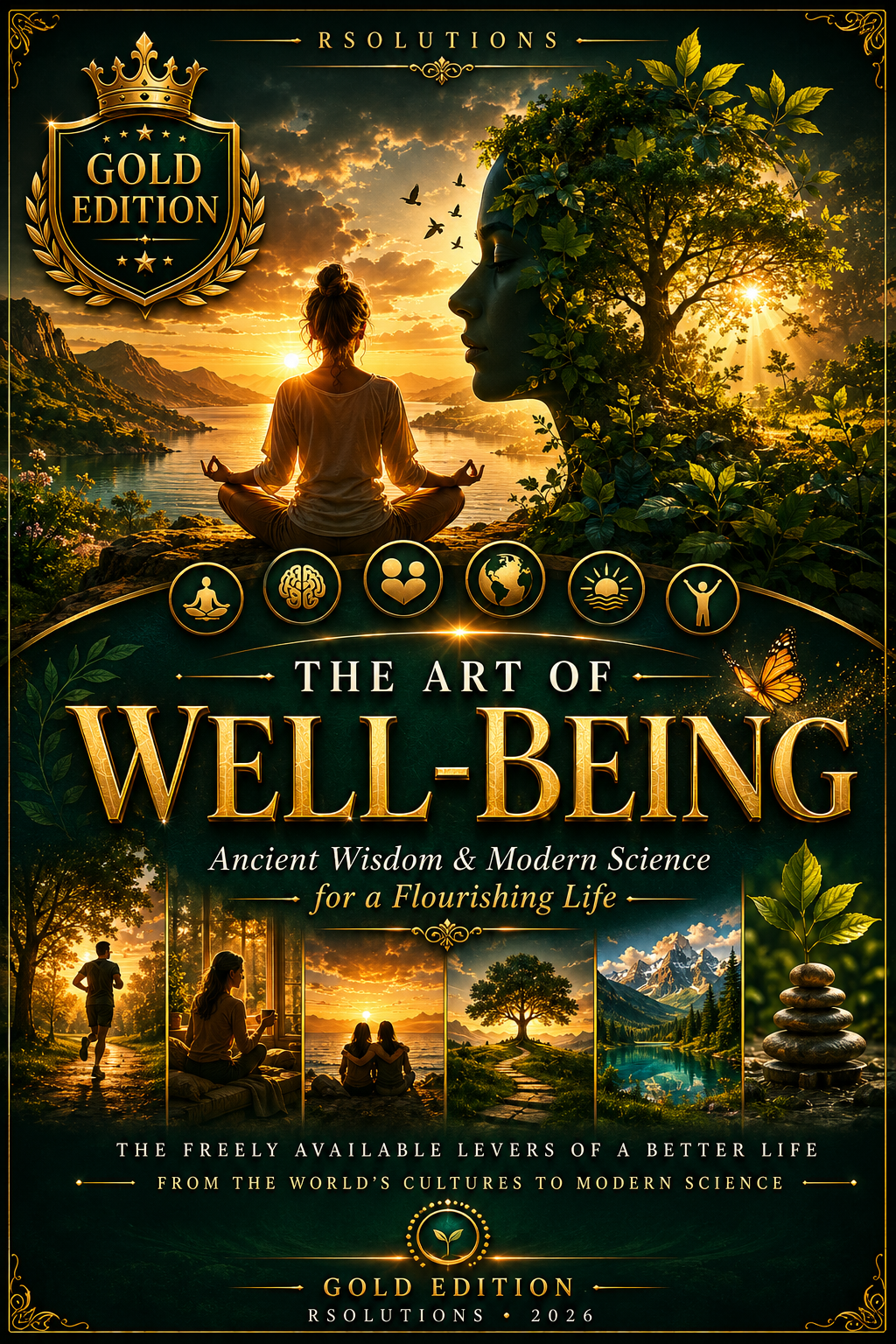
The Art of Well-Being book cover — Happiness habits: small daily practices that compound into a good life Gold Edition
Burned out and running on empty?Want to feel good again?Looking for a happier, calmer life?Tired of just getting through the week?Want well-being that actually lasts?Ready to feel like yourself again?

This book teaches you how to build real well-being — for real. Daily habits for calm, rest, happiness, and connection, drawn from science and from cultures around the world. Warm, practical, no quick-fix promises.

Is this you?

Nothing is wrong, exactly. But the color has drained out.

Good things happen and slide past you unfelt.
You postpone joy until projects, seasons, or problems end — they never do.
Your feed makes your real life feel like a rough draft.
You cannot remember your last unproductive activity done purely for pleasure.
Achievements satisfy for a week, then the line moves again.
You keep waiting to feel like yourself — later.
The method

The happiness practice: what the research and the grandmothers agree on

The adaptation problem (why arrivals never satisfy)

The mind is an adaptation machine: any new level — income, house, status — becomes the new normal within weeks, and the felt gain evaporates. Psychologists call it hedonic adaptation; the arrival fallacy is its cousin: 'I'll be happy when…' keeps moving the when. This is not pessimism — it is the user manual explaining why the strategy of accumulating arrivals fails everyone who tries it.

The encouraging flip side: a meaningful slice of day-to-day happiness responds to intentional activity — repeatable practices that resist adaptation because they are fresh each time. That is where the habits below operate.

Gratitude, done correctly

Gratitude is the most replicated finding in the happiness literature — and the most trivialized. What works is specificity and rotation: three genuinely specific good things ('the way the afternoon light hit the kitchen', not 'my family'), a few times a week, ideally with the why attached. Specificity forces attention; attention is the active ingredient.

The advanced version is the gratitude visit or letter — expressing concrete appreciation to a real person — which produces some of the largest and longest-lasting mood effects ever measured in the field. Cultures everywhere ritualized thanks before science measured it; the book collects the best of both.

Savoring: happiness density per moment

Most pleasure is lost not to scarcity but to inattention — the coffee drunk while scrolling, the sunset walked past. Savoring is deliberate amplification: slow down, engage the senses, name what is good while it is happening, and stretch it for three more breaths. Anticipation and reminiscence count too — looking forward and looking back are free seconds of the same joy.

This is a skill with a training curve: a week of savoring one small pleasure daily measurably raises the felt quality of ordinary days. Same life, more of it actually received.

Kindness, connection, and spending happiness well

Few interventions lift mood as reliably as acts of kindness — small, varied, and voluntary: the message of appreciation, the coffee bought, the help offered. Givers get a documented mood dividend, and the effect compounds socially, because kindness deepens the connections that are themselves the strongest predictor of life satisfaction.

Money's happiness manual is short: experiences beat things (they resist adaptation, improve with memory, and are usually shared), spending on others beats spending on self more often than intuition expects, and buying back time from dreaded chores is among the best trades available. The purchase that isolates you is expensive at any price.

Comparison hygiene and the daily joy floor

Comparison is the thief with a login: feeds curate everyone's highlight reel against your unedited footage, and the research on heavy passive use and mood is unflattering. Hygiene, not abstinence: curate ruthlessly, batch the checking, and answer envy with data — the whole life is never posted.

The book's daily joy floor puts a minimum under every day: one small pleasure planned and actually savored, one moment of connection, one thing done purely for its own sake — play, music, making. Cultures rich in ritualized daily joys (the shared coffee pause, the evening stroll, the candle-lit table) run this program by tradition; you can run it by design. Persistent flatness that nothing touches, though, deserves a professional conversation — that is health, not habit.

Note: This book and this page are for general education and personal growth. They do not provide medical, psychological, or nutritional advice and do not replace professional care. If you are struggling with your physical or mental health, please consult a qualified professional.
Action plan

The 7-habit happiness practice

1

Write three specific good things

A few evenings a week, with the why. Specificity is the active ingredient; 'my family' does not count, 'the way she laughed at dinner' does.

2

Savor one pleasure daily

Pick it in the morning, receive it fully when it comes — senses on, three extra breaths. Density over quantity.

3

Commit one act of kindness

Small, varied, voluntary — an appreciation message, a coffee, a hand. The giver's dividend is real.

4

Spend on experiences and time

Redirect one 'thing' purchase this month into an experience — preferably shared — or into buying back a dreaded chore.

5

Practice comparison hygiene

Curate the feed, batch the checking, answer envy with 'the whole life is never posted'.

6

Protect one pointless joy

One activity weekly with zero productive value — play, music, making, wandering. Purpose-free is the point.

7

Close the day with reflection

Two minutes: what was good, who mattered, what deserves thanks tomorrow. Attention trains toward what it reviews.

Related searches this page answers

Built for the search you already made.

Core searches

how to be happier · happiness habits · science of happiness · daily happiness practices · what makes people happy

Practices

gratitude practice · three good things · savoring · acts of kindness · happiness journal

Traps

hedonic adaptation · arrival fallacy · happiness treadmill · social media comparison · chasing happiness

Spending & joy

experiences over things · spending money happiness · simple pleasures · everyday joy · hygge happiness

Get the complete system

This guide comes from The Art of Well-Being.

Everything on this page is one slice of the full book. Prices are Amazon listing references and may vary by region, taxes, and availability.

Lite Edition

$9.99
$4.99
Free on Kindle Unlimited
  • Kindle eBook
  • Core system in one sitting
  • Best for a fast start
  • Direct Amazon purchase
Buy Lite on Amazon

Paperback

$29.99
$19.99
  • Premium print option
  • For shelf, notes or gift
  • Availability may vary
  • Amazon listing/search
Find Paperback on Amazon
FAQ

Questions people ask about happiness habits.

Can you really make yourself happier?

Within honest limits, yes — a meaningful portion of day-to-day happiness responds to intentional practice: gratitude, savoring, kindness, connection, and attention management. The habits are small; the compounding is not.

Why doesn't achieving goals make me happy for long?

Hedonic adaptation: the mind normalizes every new level within weeks and moves the line. Arrivals were never the vehicle — repeatable daily practices are, because they refresh instead of normalize.

Does gratitude journaling actually work?

The research is robust when it is done with specificity ('the way the light hit the kitchen') a few times weekly, rather than rote daily lists. The gratitude letter to a real person shows some of the largest effects ever measured.

What is savoring?

Deliberately amplifying good moments: slowing down, engaging senses, naming the good while it happens, stretching it three breaths. It also works forward (anticipation) and backward (reminiscence) — three timelines of the same free joy.

Do experiences really beat possessions?

Consistently: experiences resist adaptation, improve in memory, and are usually shared — three things objects rarely do. The happiest purchases tend to buy moments, connection, or time.

Is social media making me unhappier?

Heavy passive consumption correlates with worse mood and more envy in study after study. Hygiene helps: ruthless curation, batched checking, active over passive use — and honest breaks.

What is the fastest mood lift on this page?

An act of kindness plus a savored pleasure today — both produce same-day effects. A brisk walk outdoors while savoring counts twice.

Is wanting to be happier selfish?

The evidence says the opposite: happier people are more generous, healthier, and better to live and work with. The practices themselves — gratitude, kindness, presence — are other-directed by design.

What if none of this touches the flatness?

Persistent emptiness, loss of interest in everything, or low mood that habits do not move deserves a professional conversation — that is health, not a happiness-practice failure. This book is education and daily practice, not treatment.

Where is the full happiness system?

The happiness and joy pillar of The Art of Well-Being — the practices, the science, and the world's traditions of daily joy — in Lite and Gold editions.

Final step

Stop waiting at the finish line. Happiness commutes daily.

Three good things, one savored pleasure, one kindness — start today, compound for a year, and the color comes back. The full practice is in the book.