
RSOLUTIONS official logoRSOLUTIONS
For people suspicious that some cultures figured out what we optimized away

Wellness rituals around the world: what humanity already knows about living well

While modern life was optimizing rest into productivity apps, older cultures kept rituals that quietly deliver what the research now prescribes: presence, connection, nature, rhythm, and enough. This is a tour of the best of them — and how to bring them home.

HyggeIkigaiForest bathingFika & sobremesaDolce far nienteUbuntu

From The Art of Well-Being — 8 Parts · 40 Chapters · Purchase completed on Amazon

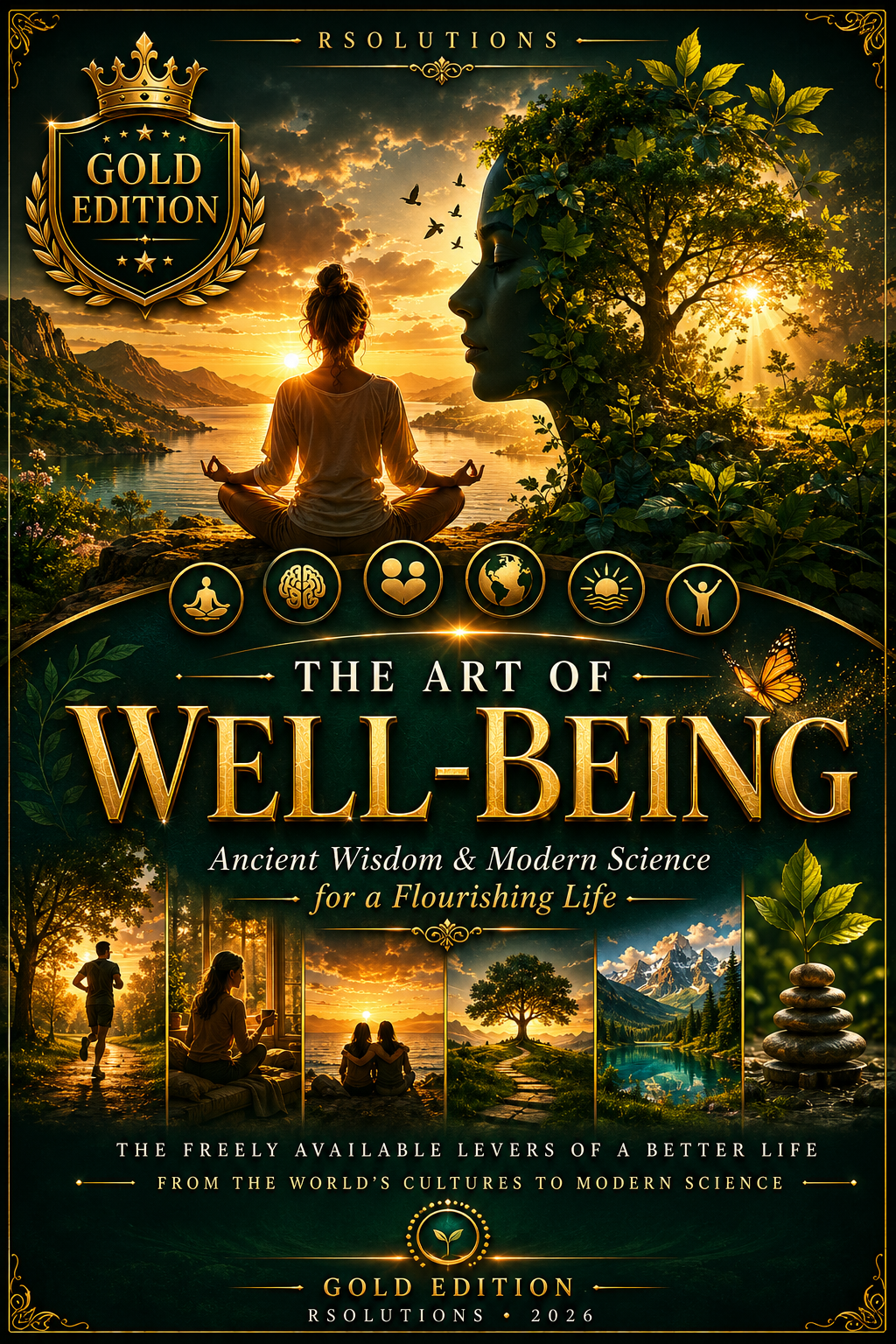
The Art of Well-Being book cover — Wellness rituals around the world: what humanity already knows about living well Gold Edition
Burned out and running on empty?Want to feel good again?Looking for a happier, calmer life?Tired of just getting through the week?Want well-being that actually lasts?Ready to feel like yourself again?

This book teaches you how to build real well-being — for real. Daily habits for calm, rest, happiness, and connection, drawn from science and from cultures around the world. Warm, practical, no quick-fix promises.

Is this you?

You have optimized everything except the feeling of being alive.

Your rest has KPIs and your hobbies have monetization plans.
Coffee is fuel at a desk, never a pause with a person.
Nature is a screensaver you have not physically visited in months.
Meals end the moment the last fork drops — if they ever began as meals.
Doing nothing makes you itch for a device within ninety seconds.
You suspect your grandmother's slower life contained something you deleted.
The method

A field guide to the world's well-being wisdom

Northern comfort: hygge, fika, lagom, friluftsliv

Denmark's hygge is engineered coziness as a social technology: candles, warmth, simple food, and — the load-bearing element — unhurried togetherness with no agenda. Sweden answers with fika, the twice-daily coffee pause taken with people rather than over keyboards, and lagom, the aesthetic of 'just the right amount' that quietly inoculates against the more-is-more treadmill.

The same region contributes friluftsliv — open-air living in all weathers — and Finland's sauna, a ritual of heat, silence, and resetting that doubles as the national therapy couch. The shared thread: comfort and recovery treated as culture, not as indulgence requiring a doctor's note.

Japanese precision: ikigai, forest bathing, tea, wabi-sabi

Ikigai names the reason you rise: the overlap of what you love, what you are good at, and what the world receives from you — less a Venn puzzle than a daily orientation toward mattering. Okinawan communities famous for vitality speak of it alongside their other engine: lifelong social circles that never let anyone drift into isolation.

Shinrin-yoku — forest bathing — is unhurried immersion in trees with senses open, now backed by a research file linking it to lowered stress markers. The tea ceremony distills mindfulness into choreography: full attention to one bowl, one moment, one guest. And wabi-sabi completes the set — the trained eye for beauty in the imperfect and impermanent, an aesthetic vaccine against perfectionism.

Southern rhythm: dolce far niente, passeggiata, sobremesa, siesta

Italy defends dolce far niente — the sweetness of doing nothing — idleness as delicacy rather than failure, and the passeggiata, the slow evening walk whose purpose is the walking, greeting, and being among neighbors. The Netherlands' niksen makes the same case in Dutch: purposeless pause as maintenance for the mind.

Spain and Latin America contribute sobremesa — the golden hour of table-talk after the meal ends, when the food is gone and the connection is served — and the siesta tradition, honoring the body's real midday dip rather than caffeinating through it. Mediterranean life stitches these into a rhythm the longevity literature keeps circling back to: movement woven into days, meals taken together and slowly, and rest that arrives on schedule rather than at collapse.

Ubuntu and the circle: connection as identity

Southern Africa's ubuntu — 'I am because we are' — reframes well-being from private achievement to shared condition: the self as a node in a web of mutual recognition, where your flourishing and mine are not separable accounts. It is the philosophical spine of what the connection research keeps measuring from outside.

Versions of the circle appear everywhere: communal feasts, harvest festivals, days of rest kept collectively so that no one has to earn their pause alone. The pattern beneath: cultures that endure institutionalize belonging — they do not leave the most important predictor of human thriving to individual willpower and leftover time.

Bringing it home: ritual adoption without the costume

The point is not cosplay — buying candles does not import Denmark. Each ritual encodes a principle: hygge is scheduled unhurried togetherness; fika is the pause taken with people; forest bathing is nature at full attention; sobremesa is lingering as love; ikigai is orientation toward mattering; ubuntu is belonging as identity. Adopt the principle, and the local form can be yours: your table, your park, your people.

The book's method: choose two rituals that answer your actual deficits — the connection-starved adopt the table rituals; the depleted adopt the pauses; the unmoored adopt ikigai's morning question. Practice them weekly until they stop being techniques and become, as they always were elsewhere, simply how life is lived.

Note: This book and this page are for general education and personal growth. They do not provide medical, psychological, or nutritional advice and do not replace professional care. If you are struggling with your physical or mental health, please consult a qualified professional.
Action plan

7 rituals to adopt this month (principles included)

1

Host one hygge evening

Warm light, simple food, phones away, no agenda, unhurried people. Coziness as a scheduled social act.

2

Take a real fika daily

One coffee or tea pause with a person — or at least away from every screen. The pause is the product.

3

Bathe in a forest (or a park)

One hour, senses open, phone silenced, no route goals. Nature at full attention, weekly if you can.

4

Practice sobremesa

After one meal a week, nobody leaves the table for thirty minutes. The conversation after the food is the dessert.

5

Walk the passeggiata

An evening stroll whose purpose is strolling — greet neighbors, notice the street, arrive nowhere.

6

Ask the ikigai question

Each morning: what today is worth rising for — what you love, do well, and give? One sentence, aloud or on paper.

7

Live one ubuntu act

Weekly, invest in the web: check on someone, share the surplus, show up. You are because you all are.

Related searches this page answers

Built for the search you already made.

Nordic

hygge · fika · lagom · friluftsliv · sauna culture

Japanese

ikigai · forest bathing · shinrin yoku · tea ceremony · wabi sabi

Mediterranean & Latin

dolce far niente · passeggiata · sobremesa · siesta culture · slow living

Philosophy

ubuntu · niksen · blue zones lifestyle · shared meals culture · community wellbeing

Get the complete system

This guide comes from The Art of Well-Being.

Everything on this page is one slice of the full book. Prices are Amazon listing references and may vary by region, taxes, and availability.

Lite Edition

$9.99
$4.99
Free on Kindle Unlimited
  • Kindle eBook
  • Core system in one sitting
  • Best for a fast start
  • Direct Amazon purchase
Buy Lite on Amazon

Paperback

$29.99
$19.99
  • Premium print option
  • For shelf, notes or gift
  • Availability may vary
  • Amazon listing/search
Find Paperback on Amazon
FAQ

Questions people ask about wellness rituals from world cultures.

What is hygge, actually?

Denmark's practice of engineered coziness — warm light, simple comforts, and above all unhurried togetherness without agenda. The candles are props; the presence is the ritual.

What is ikigai and how do I find mine?

A Japanese framing for 'the reason you rise': where what you love, what you do well, and what others receive from you overlap. Start smaller than a life purpose — name what makes tomorrow morning worth it, and let the answer grow.

Is forest bathing scientifically real?

Unhurried, attentive time among trees is linked in studies to lowered stress markers and improved mood. It is not medicine and needs no mysticism — an attentive hour in any green space captures most of the practice.

What is fika, and how is it different from a coffee break?

Sweden's fika is the pause taken as a social ritual — with people, without keyboards. The desk coffee refuels; the fika restores. The difference is the company and the full stop.

What is sobremesa?

The Spanish-language world's after-meal lingering: the table conversation that continues once the plates are empty. It converts eating into connection — the cheapest deep ritual on this page.

What does ubuntu mean?

A Southern African philosophy summarized as 'I am because we are': personhood as fundamentally relational. As practice, it means treating belonging and mutual care as identity, not charity.

What is dolce far niente / niksen?

Italy's 'sweetness of doing nothing' and the Dutch art of purposeless pause — idleness honored as maintenance for the mind rather than failure of productivity. Ninety uncomfortable seconds in, the itch fades; that is the practice working.

Do I have to adopt another culture's ritual to benefit?

No — adopt the principle, keep your own form: scheduled togetherness, real pauses, attentive nature time, lingering tables, a reason to rise, invested community. The rituals are local dialects of universal grammar.

Which ritual should I start with?

Match your deficit: connection-starved → sobremesa or hygge evening; depleted → fika and niksen; unmoored → the ikigai question; screen-saturated → forest bathing. Two rituals, practiced weekly, beat seven attempted once.

Where is the full world tour?

The Art of Well-Being weaves these traditions through every pillar — with the science beside the stories — in Lite and Gold editions.

Final step

Humanity already wrote the manual. It is scattered across the world.

Hygge tables, forest hours, morning reasons, lingering conversations — collect the rituals that answer your life. The full collection is in the book.