
RSOLUTIONS official logoRSOLUTIONS
For moments when your body panics and you need a hand-brake

Breathing exercises: the fastest switch your nervous system has

You cannot think your way out of a stress spike — but you can breathe your way out. Breath is the only part of the autonomic nervous system with a manual override, and learning to use it is like finding a dimmer switch for your own alarm system.

Box breathing4-7-8Physiological sighVagus nerveSleep breathingPerformance breathing

From The Art of Inner Mastery — 8 Parts · 39 Chapters · Purchase completed on Google Play

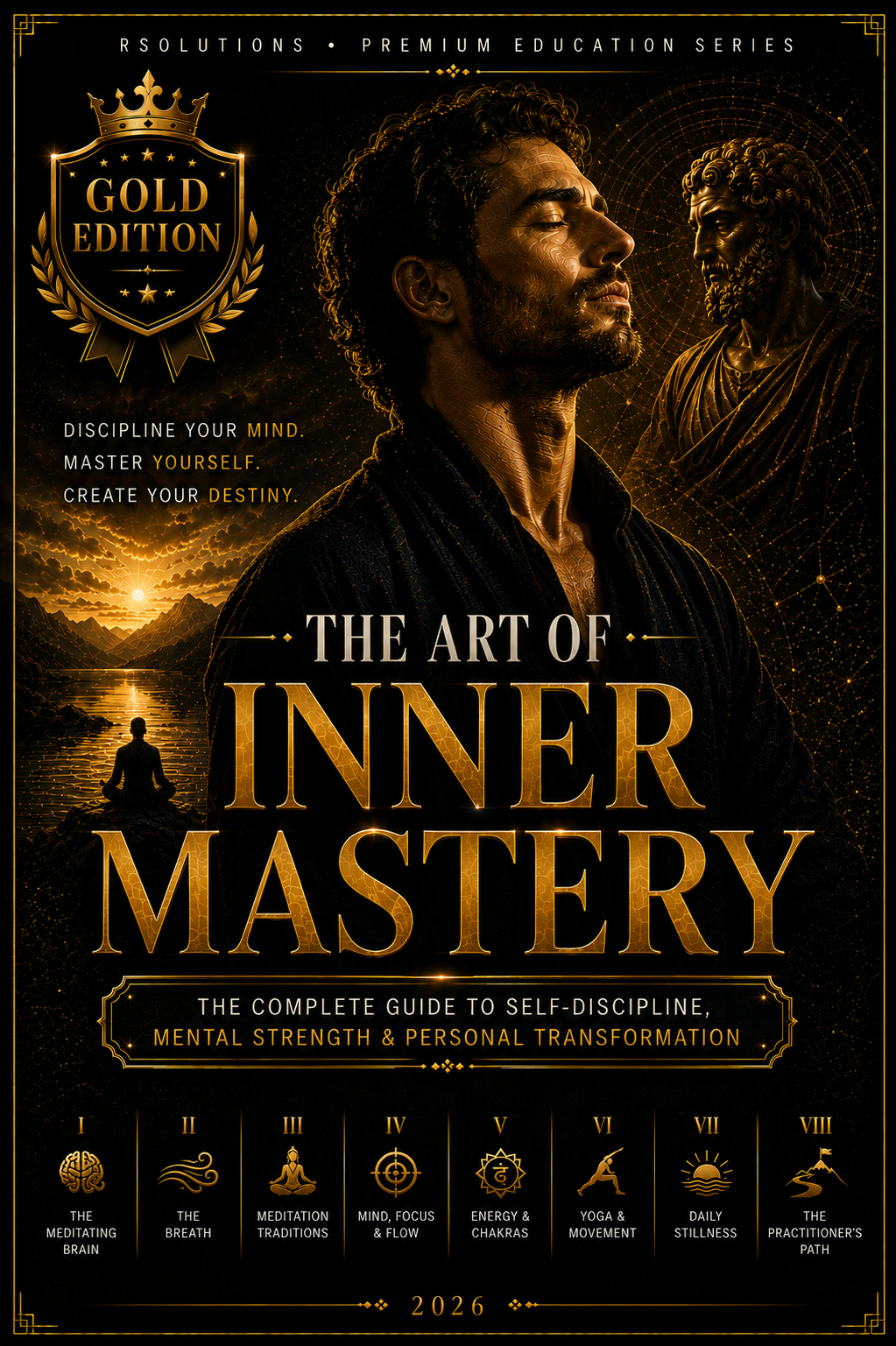
The Art of Inner Mastery book cover — Breathing exercises: the fastest switch your nervous system has Gold Edition
Mind won't stop racing?Stressed and can't switch off?Looking for inner peace?Want to finally learn meditation?Tired of living on edge?Ready to master your inner world?

This book teaches you how to master your inner world — for real. Meditation that sticks, breathwork that calms you in minutes, and emotional control you can train. Clear, practical, no mysticism required.

Is this you?

Your breath is running you. Time to reverse that.

Stress hits and your breathing goes shallow, fast, and high in the chest.
You lie in bed wired, heart tapping, mind sprinting.
You walk into pressure moments already breathless.
'Just take a deep breath' has never once worked for you — big gulps make it worse.
You spend all day in low-grade tension you cannot name.
You have heard about breathwork and have no idea where to start.
The method

The breath toolkit: five techniques, matched to five moments

Why breath is the override switch

Heart rate, digestion, stress hormones — all run automatically. Breath is the exception: automatic and controllable. That dual citizenship makes it a direct line into the autonomic nervous system: slow, exhale-weighted breathing stimulates the vagus nerve and shifts you toward the parasympathetic 'rest' state within minutes; fast, shallow breathing does the opposite.

One principle unlocks most of the toolkit: inhales activate, exhales calm. Lengthen the exhale relative to the inhale and the heart literally slows on the out-breath. Most 'deep breath' advice fails because people take huge inhales — the activating half — and skip the part that soothes.

The physiological sigh: fastest relief on record

For acute stress, research points to the physiological sigh: two inhales through the nose (one full, one short top-up), then a long, complete exhale through the mouth. One to three cycles. The double inhale pops collapsed air sacs in the lungs, offloading CO2 efficiently and dropping arousal faster than almost any other voluntary technique.

This is the tool for the moment itself — before the difficult call, after the shock, mid-argument. It works in under thirty seconds and nobody around you notices.

Box breathing: the steady-state stabilizer

Box breathing — inhale 4, hold 4, exhale 4, hold 4 — is the military-and-surgeons classic for controlled composure. The rhythm and counting occupy the mind while the pattern regulates the body: ideal before performance, during sustained pressure, or as a short reset between tasks.

Start at four seconds per side; grow the box slowly if comfortable. Three to five minutes is a full dose.

4-7-8 and the sleep gateway

For downshifting into sleep: inhale through the nose for 4, hold for 7, exhale slowly through the mouth for 8. The long hold and extended exhale push hard toward parasympathetic dominance — which is why this one is famous for bed, not for the office. Four cycles is the standard starting dose; light-headedness means shorten the counts.

Pair it with a body scan in bed and you have a two-tool sleep stack from the book that outperforms most people's entire wind-down routine.

Coherent breathing and daily baseline

Beyond emergencies, the deepest gains come from changing your baseline: coherent breathing at roughly five to six breaths per minute (inhale ~5s, exhale ~5-6s) for ten minutes daily maximizes heart-rate variability — a key marker of stress resilience — and trains your default state toward calm.

Two supporting habits multiply everything: breathe through the nose by default (slower, filtered, better gas exchange) and let the belly, not the chest, lead. Ten minutes a day plus two habits — that is a renovated nervous system in a few weeks.

Note: This material is for general education and personal growth. It is not medical or psychological advice and does not replace professional care. If you experience persistent anxiety, depression, or other health concerns, please consult a qualified professional.
Action plan

Your 7-step breath training plan

1

Learn the sigh first

Practice the physiological sigh five times today — double nasal inhale, long mouth exhale. This is your emergency brake; install it before you need it.

2

Fix the default channel

Nose in, nose out, all day, unless speaking or sprinting. Notice and close mouth-breathing every time you catch it.

3

Drop the breath low

Hand on belly: let it lead each inhale. Chest breathing is the anxiety posture; belly breathing is the calm one.

4

Box-breathe before pressure

Three minutes of 4-4-4-4 before meetings, difficult conversations, or performances.

5

Run 4-7-8 at lights-out

Four cycles in bed. Extend the exhale gently; never force the hold.

6

Add the daily ten

Ten minutes of coherent breathing (~5.5s in, ~5.5s out) once a day — the baseline-changer, not the emergency tool.

7

Match tool to moment

Spike → sigh. Sustained pressure → box. Sleep → 4-7-8. Baseline → coherent. One month of matching and it becomes reflex.

Related searches this page answers

Built for the search you already made.

Core searches

breathing exercises · breathing techniques · breathwork for beginners · how to calm down fast · breathing for stress

Techniques

box breathing · 4-7-8 breathing · physiological sigh · coherent breathing · alternate nostril breathing · diaphragmatic breathing

Science

vagus nerve breathing · parasympathetic activation · heart rate variability · nasal breathing benefits · extended exhale

Situations

breathing before sleep · breathing for focus · pre performance breathing · breathing at work · breathing to calm down

Get the complete system

This guide comes from The Art of Inner Mastery.

Everything on this page is one slice of the full book. Prices are Google Play listing references and may vary by region, taxes, and availability.

FAQ

Questions people ask about breathing exercises.

What is the fastest breathing technique to calm down?

The physiological sigh: two nasal inhales (one full, one short top-up), then a long complete mouth exhale. One to three cycles typically lowers acute stress within thirty seconds.

How does box breathing work?

Equal counts of inhale, hold, exhale, hold (classically 4 seconds each) regulate the breath rhythm while the counting occupies the mind — a stabilizer used by military units and surgeons for composure under sustained pressure.

Is 4-7-8 breathing good for sleep?

Yes — the long hold and extended exhale strongly favor the parasympathetic state. Four cycles at lights-out is the standard dose; shorten the counts if you feel light-headed.

Why does 'take a deep breath' never work for me?

Because a big inhale is the activating half of the cycle. Calm lives in the exhale — make the out-breath longer than the in-breath and the advice finally works.

Nose or mouth breathing?

Nose by default: it slows the breath, filters air, supports better gas exchange, and biases you toward calm. Mouth breathing is for speech and hard exertion.

What is coherent breathing?

Breathing at roughly five to six breaths per minute with relaxed, even inhales and exhales. Practiced ten minutes daily, it maximizes heart-rate variability and shifts your baseline toward stress resilience.

Can breathing exercises replace meditation?

They are complementary: breathwork changes state fast; meditation trains attention and long-term regulation. The book sequences them as one system — breath as the lever, meditation as the gym.

Are there risks?

Gentle techniques are safe for most people. Skip breath holds and intense practices while driving or in water, go easy with any cardiovascular or respiratory condition, and treat dizziness as the signal to soften the practice. When in doubt, ask a professional.

How long until my baseline changes?

Acute tools work in seconds to minutes from day one. Baseline shifts — lower resting tension, better HRV, faster recovery — typically show within two to six weeks of daily practice.

Where is the full breath system?

The breathwork part of The Art of Inner Mastery — the complete toolkit, the science, and the training progression — in Lite and Gold editions.

Final step

The hand-brake has been under your nose the entire time.

Five techniques, matched to the right moments, retrain your nervous system in weeks. Learn the complete system and carry it everywhere.