
RSOLUTIONS official logoRSOLUTIONS
For people whose body is here and mind is permanently elsewhere

Mindfulness in daily life: presence for people with no time to sit

You eat without tasting, drive without seeing, and listen while composing your reply. Life is happening in the only moment that exists — and you keep missing it. Mindfulness in daily life is the fix, and it requires zero extra minutes in your day.

Off autopilotAnchor momentsMindful eatingPresent listeningPhone boundariesSavoring

From The Art of Inner Mastery — 8 Parts · 39 Chapters · Purchase completed on Google Play

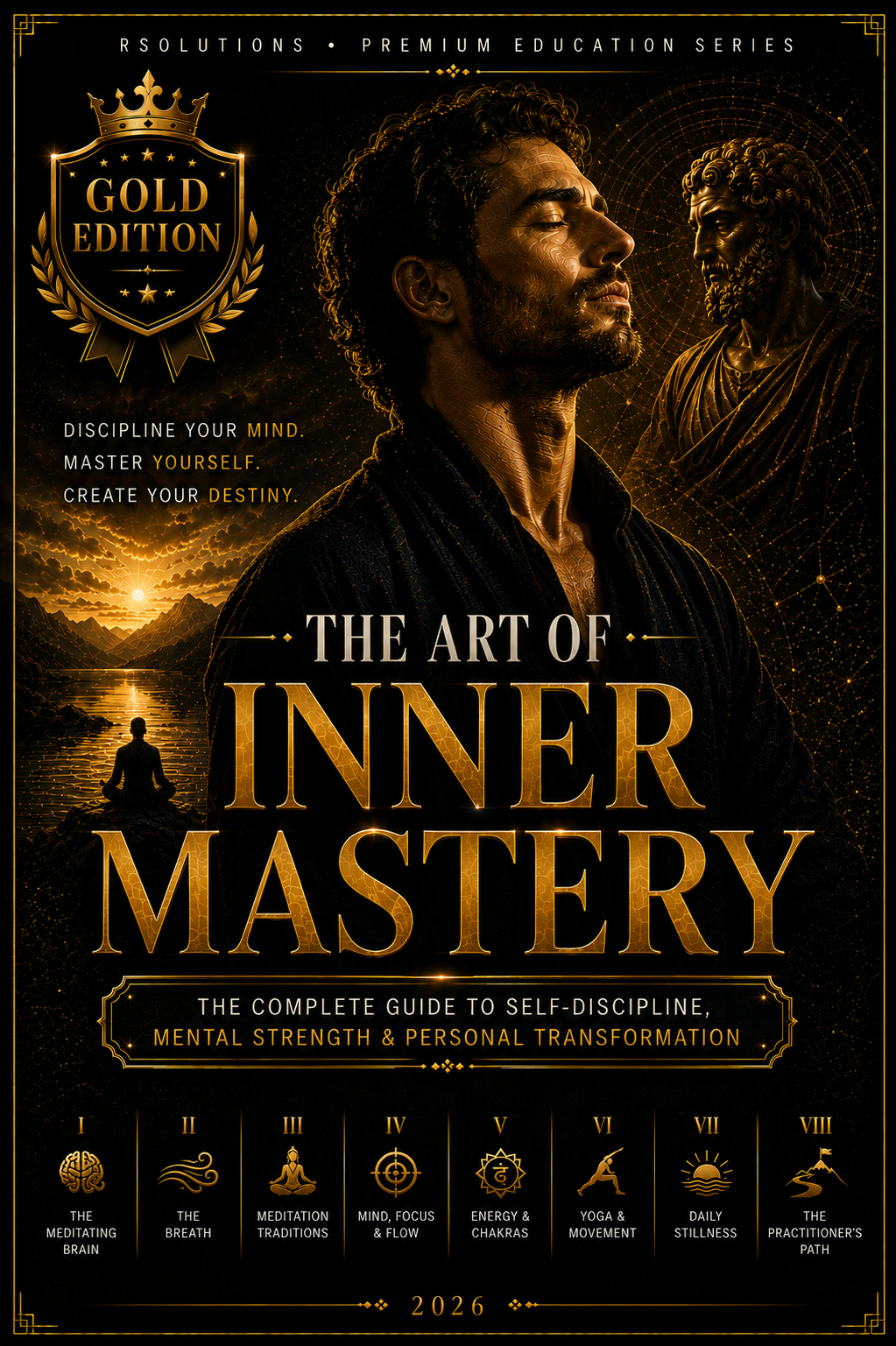
The Art of Inner Mastery book cover — Mindfulness in daily life: presence for people with no time to sit Gold Edition
Mind won't stop racing?Stressed and can't switch off?Looking for inner peace?Want to finally learn meditation?Tired of living on edge?Ready to master your inner world?

This book teaches you how to master your inner world — for real. Meditation that sticks, breathwork that calms you in minutes, and emotional control you can train. Clear, practical, no mysticism required.

Is this you?

You are not living your days. You are processing them.

Whole commutes, meals, and conversations vanish without a trace.
You are physically with your family and mentally in tomorrow's meeting.
You check the phone mid-sentence — yours or someone else's.
Weekends evaporate and you cannot say where they went.
You taste the first bite and inhale the rest.
The present moment feels like a waiting room for the next thing.
The method

The informal practice: your existing day as the training ground

Autopilot: useful servant, terrible master

Around half of waking life runs on mental autopilot — and research famously links a wandering mind with lower reported happiness. Autopilot is fine for tying shoes; the problem is that it has quietly annexed meals, conversations, commutes, and evenings, leaving you a spectator of your own timeline.

Informal mindfulness is the counter-move: deliberately inhabiting actions you already perform. No cushion, no schedule change — the day itself becomes the gym.

Anchor moments: the core technique

Pick three recurring daily actions — the first coffee, the walk to the car, the shower — and declare them anchor moments: for their duration, attention stays with the senses. The heat of the cup, the sounds of the street, the water on your back. Mind drifts, you return, same as formal meditation.

Anchors work because they borrow existing structure: you never need to remember 'to be mindful' in the abstract, only to honor three appointments you already keep. Three anchors a day quietly rebuild the attention habit across everything.

One task, one moment: mindful working and moving

Single-tasking is mindfulness in work clothes: one thing, done with full attention, finished, then the next. The quality difference is measurable; the felt difference — calm instead of scatter — is immediate. Transitions count too: the book's one-breath practice inserts a single conscious breath between activities, turning the day's cracks into micro-resets.

Movement is the easiest doorway: walking with attention on footsteps and surroundings instead of the phone converts dead transit time into practice. Same commute, different nervous system.

Eating, listening, and the people in front of you

Mindful eating — screens away, actual tasting, noticing texture and fullness — turns a refuel stop into one of the day's genuine pleasures, and tends to improve how much and how fast you eat without any rules. Start with just the first three bites of each meal taken slowly; the habit spreads on its own.

Mindful listening may be the highest-stakes version: attention fully on the speaker, your reply left uncomposed until they finish. People feel the difference instantly. Presence, it turns out, is the rarest gift you can hand another person — and the cheapest.

The phone: rules of engagement

No single object fights harder against your presence. The workable defense is boundaries, not abstinence: phone-free meals, a phone-free first and last half hour of the day, and the pocket rule — in company, the phone stays out of sight, because its mere visibility measurably degrades conversation quality.

Each reclaimed pocket of attention compounds: presence is a habit loop too, and every screen-free meal is a vote for the person who actually lives their life instead of scrolling past it.

Note: This material is for general education and personal growth. It is not medical or psychological advice and does not replace professional care. If you experience persistent anxiety, depression, or other health concerns, please consult a qualified professional.
Action plan

7 ways to practice presence today (no extra time required)

1

Choose three anchors

First coffee, shower, walk to the car — three daily actions now done with full sensory attention.

2

Take the one breath

One conscious breath at every transition: before entering the house, starting the car, opening the laptop.

3

Eat the first three bites slowly

Screens away, actual tasting. Let the habit spread through the meal on its own.

4

Listen without composing

In your next conversation, hold attention on the speaker until they finish. Notice the pull to rehearse your reply; return.

5

Walk one stretch phoneless

Pick one daily walk — corridor, block, parking lot — and give it to footsteps and surroundings.

6

Fence the phone

Phone-free meals and a screen-free first and last 30 minutes of the day. Out of sight in company.

7

Savor one thing deliberately

Once a day, stretch a good moment — coffee, sunset, a laugh — for three full breaths. Savoring is presence squared.

Related searches this page answers

Built for the search you already made.

Core searches

mindfulness in daily life · how to be more present · stop living on autopilot · mindfulness for busy people · mindful living

Practices

mindful eating · mindful walking · mindful listening · anchor moments · one breath practice · savoring

Modern life

phone free moments · digital mindfulness · always distracted · single tasking · mindful work

Being present

present with family · present with kids · living in the present · attention to the present · slow living

Get the complete system

This guide comes from The Art of Inner Mastery.

Everything on this page is one slice of the full book. Prices are Google Play listing references and may vary by region, taxes, and availability.

FAQ

Questions people ask about mindfulness in daily life.

Can I practice mindfulness without meditating?

Yes — informal practice (anchors, mindful eating, present listening) is real training and fits inside your existing day. Formal sitting deepens it, but the daily-life version alone changes how your days feel.

What is an anchor moment?

A recurring daily action — first coffee, shower, a short walk — deliberately done with full sensory attention. Three anchors a day quietly retrain attention without costing a minute.

How is this different from just 'slowing down'?

Slowing down changes pace; mindfulness changes attention. You can be slow and absent, or quick and fully present. The training is in the noticing and returning, at any speed.

Why do my days feel like they vanish?

Memory requires attention: what autopilot processes, memory barely records. Presence is also why vacations feel long — novelty forces attention. Anchors and savoring bring some of that density back to ordinary days.

Does mindfulness help with rumination and worry?

It builds the noticing muscle that catches the spiral earlier and the returning muscle that redirects to now. For persistent, distressing rumination, it pairs well with professional support rather than replacing it.

How do I stay present with my kids or partner?

Structural moves first: phone out of sight, one dedicated present block daily where they have all of you. Then practice listening without composing. Ten fully present minutes beat two distracted hours.

What is the STOP technique?

A micro-reset: Stop, Take a breath, Observe what is happening in body and mind, Proceed deliberately. Four seconds that interrupt autopilot at any point in the day.

Is mindful eating a diet?

No — it is attention, not restriction: screens away, real tasting, noticing fullness. Eating behavior often improves as a side effect, but the practice is about presence, not rules.

How long until being present feels natural?

Most people feel days becoming 'longer' and calmer within two or three weeks of consistent anchors. The pull of autopilot never fully disappears; the returning just becomes fast and familiar.

Where is the complete daily-life system?

The mindfulness parts of The Art of Inner Mastery — formal and informal practice, integrated into one progression — in Lite and Gold editions.

Final step

Your life is happening right now. Attend it.

Three anchors, one breath between tasks, and a fenced phone — presence with zero extra minutes. The full system is in the book.