
RSOLUTIONS official logoRSOLUTIONS
For people whose 10-second reactions cost them 10-month repairs

Emotional regulation: master your reactions without becoming a robot

The email, the comment, the tone — and suddenly a chemical wave is making your decisions. Emotional regulation is not suppression and not pretending; it is widening the gap between what you feel and what you do, until the wisest version of you gets a vote.

Trigger → response gapName it to tame itReappraisalAnger protocolConflict calmNo suppression

From The Art of Inner Mastery — 8 Parts · 39 Chapters · Purchase completed on Google Play

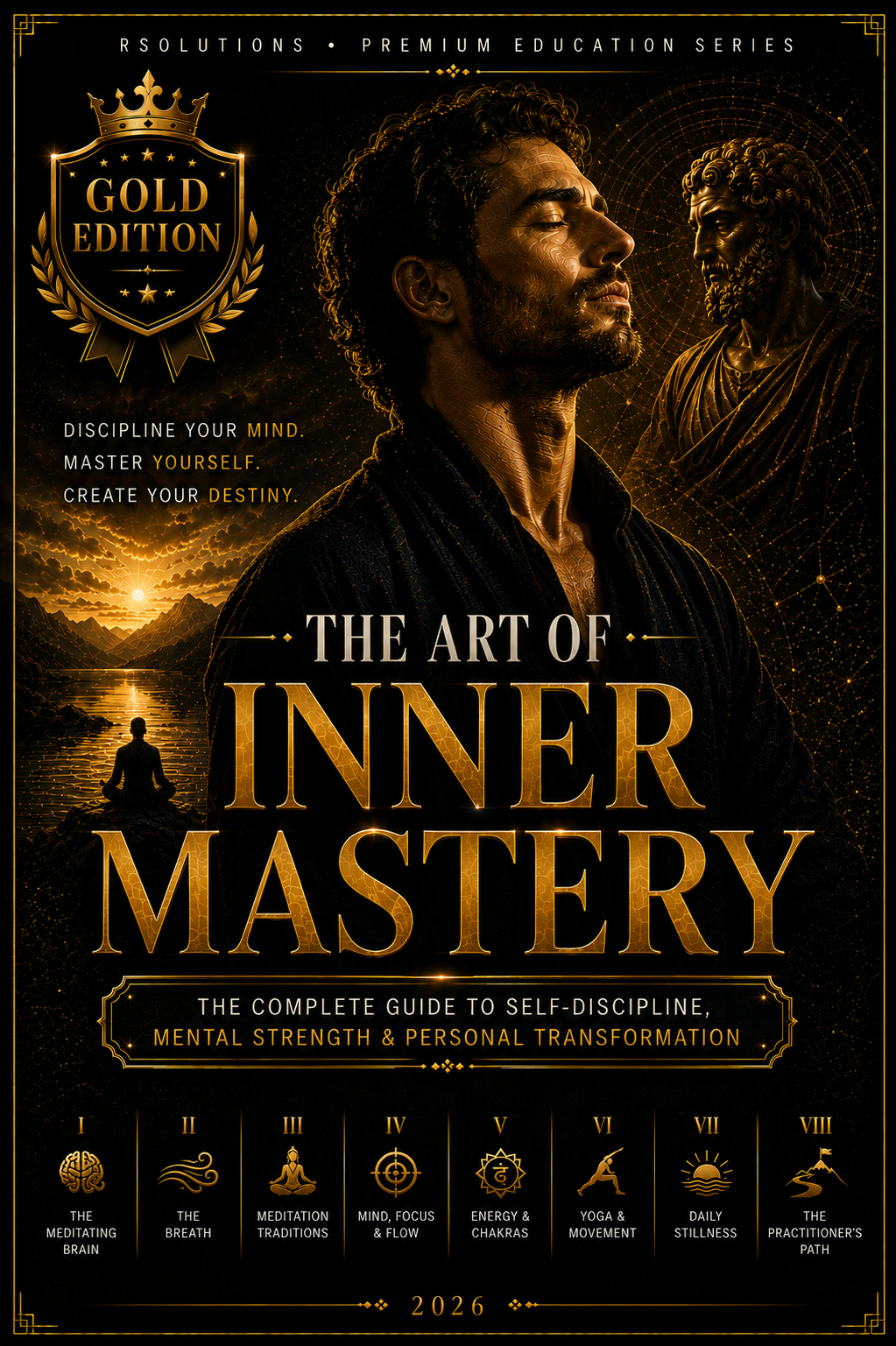
The Art of Inner Mastery book cover — Emotional regulation: master your reactions without becoming a robot Gold Edition
Mind won't stop racing?Stressed and can't switch off?Looking for inner peace?Want to finally learn meditation?Tired of living on edge?Ready to master your inner world?

This book teaches you how to master your inner world — for real. Meditation that sticks, breathwork that calms you in minutes, and emotional control you can train. Clear, practical, no mysticism required.

Is this you?

You are not too emotional. You are under-equipped.

You say things in thirty angry seconds that take months to repair.
Small frustrations hijack whole afternoons.
You either explode or swallow it — no third option ever appears.
Criticism, even mild, sets off a storm inside.
Your moods decide your productivity, your patience, your presence.
You know your triggers and they still work on you every single time.
The method

The regulation system: five skills between trigger and response

The gap: where freedom actually lives

An emotion is a wave: trigger, chemical surge, urge to act, fade. The surge itself lasts seconds to a couple of minutes — unless your thoughts keep refueling it. Regulation means not acting during the surge: the pause is not weakness or passivity; it is choosing which version of you answers.

Suppression — pretending the wave is not there — backfires: research shows it raises internal stress while leaking through anyway. The trained alternative is feel fully, act deliberately. The wave is allowed; the wave is just not in charge.

Name it to tame it

The fastest regulation tool is embarrassingly simple: label the emotion, specifically. 'I notice anger — and under it, embarrassment.' Affect labeling measurably dampens amygdala response and re-engages the prefrontal cortex: the act of naming moves you from inside the storm to beside it.

Precision multiplies the effect. 'Bad' does nothing; 'disrespected and a little scared' gives you something workable. The book includes an emotional vocabulary precisely because you can only regulate what you can name.

The body first: downshifting the hardware

Strong emotion is physiology — heart rate, breath, muscle tension — and physiology responds faster to the body than to reasoning. The sequence that works: long exhales (the physiological sigh from the breath toolkit), dropped shoulders, slower movement and speech. Downshift the hardware and the software follows.

This is why 'just calm down' fails while two long exhales succeed: one is a command the body ignores, the other is a lever the body understands.

Reappraisal: changing the story changes the wave

Emotions follow interpretations, not events. The colleague's curt message reads as attack — or as someone drowning in their own day. Cognitive reappraisal is deliberately generating alternative readings before locking in the reactive one, and it is among the best-validated regulation strategies in the literature.

The drill: catch the automatic story, ask 'what else could this mean?', generate two alternatives, and act on the most probable rather than the most inflaming. Done repeatedly, charitable-but-realistic interpretation becomes the default — and half your former triggers stop firing at all.

Triggers, anger, and conflict: the field manual

Map your top three triggers — the situations that reliably hijack you — and pre-load if-then responses for each: 'When I feel the heat rise in a meeting, I take one long exhale and ask a question instead of making a statement.' Pre-decided responses fire faster than fresh willpower.

For anger specifically: the urge to respond immediately is the anger talking. Delay is the protocol — minutes for a conversation, hours for a message, a night for anything permanent. In live conflict: slow your speech, lower your volume, ask questions, and call a timeout honestly if the wave is winning. Strength in conflict is regulation, visibly held.

Note: This material is for general education and personal growth. It is not medical or psychological advice and does not replace professional care. If you experience persistent anxiety, depression, or other health concerns, please consult a qualified professional.
Action plan

The 7-step emotional regulation training

1

Map your top three triggers

Write the three situations that reliably hijack you, and what they touch (respect, control, worth). Known triggers lose ambush power.

2

Pre-load if-then responses

For each trigger: 'When X, I do Y' — one breath, one question, one delay. Decide now, while calm.

3

Install the exhale reflex

Two long exhales at the first flush of heat. Body first, always — the mind follows the breath down.

4

Name with precision

Label the emotion and the emotion under it. 'Angry — and embarrassed.' Naming is taming.

5

Run the reappraisal drill

Daily, on small annoyances: catch the story, generate two alternative readings, act on the probable one.

6

Apply the delay ladder

Minutes before responding in person, hours for messages, overnight for anything irreversible. The wave always fades.

7

Review weekly, repair fast

Note the week's hijacks without shame, extract the pattern — and when you do slip, repair quickly and fully. Repair is also regulation.

Related searches this page answers

Built for the search you already made.

Core searches

emotional regulation · how to control your emotions · emotional control · stop overreacting · respond not react

Tools

name it to tame it · affect labeling · cognitive reappraisal · pause before reacting · sit with emotions

Anger

how to deal with anger · calm down when angry · anger management techniques · frustration tolerance · irritability

Situations

staying calm in conflict · handling criticism · emotional triggers · keep calm in arguments · emotional maturity

Get the complete system

This guide comes from The Art of Inner Mastery.

Everything on this page is one slice of the full book. Prices are Google Play listing references and may vary by region, taxes, and availability.

FAQ

Questions people ask about emotional regulation.

Is controlling emotions the same as suppressing them?

No — suppression hides the wave and pays for it in stress and leakage. Regulation feels the emotion fully while choosing the action deliberately. The feeling is allowed; the reaction is chosen.

Why do I overreact to small things?

Usually stacked load (stress, poor sleep, accumulated frustration) plus a touched trigger — the small thing is the spark, not the fuel. Trigger mapping and baseline care (sleep, breath practice) shrink the powder keg.

What is 'name it to tame it'?

Affect labeling: precisely naming what you feel ('anger, with embarrassment under it'), which measurably calms the brain's alarm response and re-engages deliberate thinking. Simple, fast, and backed by imaging studies.

How do I calm down when I'm really angry?

Body first: two long exhales, drop the shoulders, slow your speech — then delay the response (minutes in person, hours for messages, overnight for permanent decisions). Anger's demand for immediacy is the anger talking.

What is cognitive reappraisal?

Deliberately generating alternative interpretations of a trigger before reacting to the first one. Emotions follow stories; changing the story changes the wave. It is one of the best-validated regulation strategies in psychology.

How long does an emotion actually last?

The pure chemical surge typically runs seconds to a couple of minutes. What lasts hours is re-triggering by your own thoughts — which is exactly what labeling and reappraisal interrupt.

How do I stay calm in an argument?

Slow speech, lower volume, questions instead of verdicts, and an honest timeout if the wave is winning ('I want to get this right — give me ten minutes'). Regulation under fire is the most respected move in any conflict.

Are feelings facts?

Feelings are real data about your state, not verdicts about reality. 'I feel disrespected' means the feeling exists — whether disrespect occurred is a separate question worth checking before acting.

Is this trainable for someone reactive their whole life?

Yes. Reactivity is a trained pattern, and the counter-pattern — breath, naming, reappraisal, delay — trains the same way. First visible gains typically arrive within weeks; if emotions are persistently overwhelming or destructive, a professional is the right ally alongside the practice.

Where is the full system?

The emotional mastery part of The Art of Inner Mastery — the complete toolkit with its meditation and breathwork foundations — in Lite and Gold editions.

Final step

Feel everything. Be run by nothing.

The gap between trigger and response is trainable — and everything you care about lives inside it. Start training this week.